
One of the biggest decisions in a van build happens before the build even starts — choosing the right chassis.
At Carrve, we’ve built enough conversion vans to know this: your chassis directly impacts layout flexibility, total cost, and your personal preferences. If you’re debating Cargo vs Crew van for a custom conversion, here’s what you need to know from a builder’s perspective.
Start With the Right Platform
We typically build on the Sprinter 170 or 170 EXT 2500, although we do offer select layouts on the Sprinter 144” and Ford Transit 148 Ext. In this post, we’ll be talking exclusively about the Mercedes Sprinter Van as a platform for a camper van conversion.
The Mercedes Sprinter 170 2500 available in 2WD or AWD (with a noticeable price difference), and the 2500 chassis is better-suited to handle the added weight of a full camper build, cabinetry, gear, water systems, and electrical components. However, we do recommend upgraded suspension packages to better handle the weight.
Why the 170 or 170 EXT?
- Ideal length for a full-size bed + partition wall + gear storage
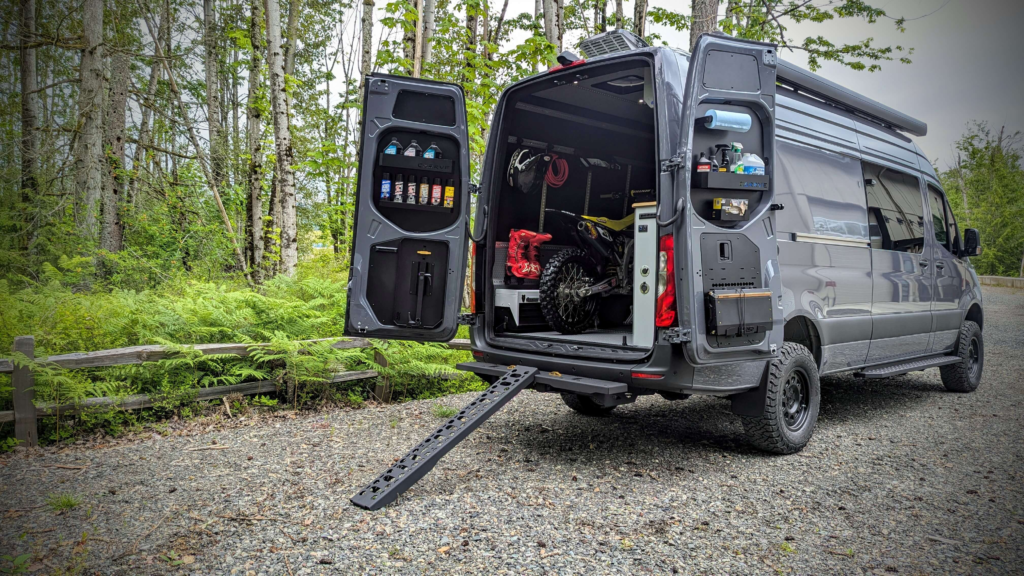
- Fits multiple dirt bikes staggered with proper clearance
- The 170 EXT adds 19” of additional floor space
- Best balance between livability and drivability
The 170 platform gives you the flexibility to design without compromise in the living area and the garage space.
Cargo vs Crew vs Passenger: What’s the Difference?
When shopping for a Sprinter (or any full-size van), you’ll typically see three main options: Cargo, Crew, and Passenger.
From a builder’s perspective, Cargo and Crew vans are the best platforms for a custom build.
Cargo Van (Our Go-To Platform)
If you’re planning a full custom van conversion, the Cargo van is usually the most cost-effective and flexible choice.
Why we prefer Cargo vans:
- Best blank slate
- No factory windows (windows can be added exactly where you want)
- Fewer OEM parts to remove
- Maximum layout flexibility
- Often lower upfront cost
Many buyers assume Crew vans are “better equipped,” but in reality, Cargo vans can be optioned with the same driver comfort and tech packages — without paying for rear seating, trim, and flooring that typically get removed during the build.
If you want windows, we can install them for roughly $900–$1,500 per window installed, depending on style and placement. In many cases, that’s still more cost-effective than purchasing a Crew van.
The Cargo gives us the cleanest starting point.
Crew Van
Crew vans can be a solid option — but they often include components that don’t align with most custom builds.
What comes standard in a Crew van:
- Factory side windows
- OEM flooring
- Headliner
- Fixed rear bench seat
- Rear seat mounting plates (DOT-approved)
- More commonly optioned with Comfort Plus / Premium driver packages
Things to consider:
- You’re often paying for flooring, trim, and seats that get removed
- Fixed rear seat mounting plates cannot be relocated, so your layout must work around their position, which can limit flexibility. However, the factory system can be removed and replaced with DOT-approved aftermarket seating placed where it better fits the design.
- Newer models may include more sensors that interfere with exterior modifications (but some people prefer more sensors)
That said, we can fully remove the factory seating system and install compliant aftermarket seating in a location that better supports your layout — but this adds cost and should be factored into your decision upfront.
Crew vans do often come with nicer driver convenience packages — but that ultimately comes down to personal preference. Those same packages can usually be added or also found within a Cargo configuration.
If you plan to keep the rear seating in its factory location, a Crew van makes sense. If not, you might end up paying for features you won’t keep.
Passenger Van (Generally Avoided)
Passenger vans are rarely the right choice for a full custom build.
They typically include:
- Excess windows
- Multiple rows of seating
- Full interior trim and panels
- HVAC components and headliners that get removed
All of this adds cost and complexity — without offering much benefit for a conversion.
Rear Seating Considerations
In either Crew or Cargo vans we can install DOT-approved, compliant aftermarket seating in a location that better supports your layout and overall design goals. There are multiple seating options available depending on capacity, configuration, and intended use.
While adding compliant seating does increase cost, it gives far more flexibility than being locked into the factory mounting position.
Suspension Tip
When ordering your van, opt for multi-leaf springs instead of mono-leaf, if available.
Why?
- Better handling under added weight
- More flexibility for suspension upgrades
- Improved performance once fully built out
Beyond this, we do recommend after-market suspension packages that usually include upgrading leaf springs, allowing the van to handle better and carry the weight.
So, Cargo or Crew — What Should You Choose?
It usually comes down to personal preference.
From a builder’s perspective, both Cargo and Crew vans are great foundations for a custom build. What matters most is finding the right chassis configuration at the right price — especially the driver convenience package, drivetrain (2WD vs AWD), features, and even color if that’s important to you.
Ultimately, the van you purchase should align with your budget, your priorities, and how you plan to use it. We can build all of our layouts on either platform.
Planning a Custom Van Build?
Choosing the right chassis is the foundation of everything that follows — cost, layout, suspension, and overall performance.
If you’re in the research phase and want guidance on selecting the right platform for your build, reach out to our team. We’re always keeping an eye on the market and happy to help you choose the right van to fit your build.